Thursday, 5 July 2012

RESEARCH INTO KANKOURAN

1983 was the year that KanKouran the West African Dance Company was founded by Assane Konte. It was founded as an extension of the arts and they aim to expose local and national and international audiences. The company produce lectures, performances and workshops for all kinds of people. Despite Mr Konte being a native African, (the origin of the dance) the company’s performing artists are from the District of Columbia are and represent a variety of different cultural backgrounds.
The company extracts its name from the people of Senegal, and the Mandingo culture. KanKouran “in Mandingo culture is a guide who teaches young boys and girls the meaning of manhood and womanhood as a part of their transition into adult hood.”

Considering the African dance origin of the name, Kankouran we wanted to intergrate the West African culture and our own idea’s/pre-conceptions together. Our friend Emily Chawawa has put herself forward for the role of the woman in our video. She fits the image we had in mind for the character, young, unique, individual style. She can suit versatile looks, which is what we plan to create.

Due to the generic aspects of the band, we thought it appropriate to have 'youths' acting in this video. This links in with the style of the dance, (the transition from childhood to adulthood) and the individual electronic/indie/pop genre the band represents. The aspect of rebellion is featured in all of these genres and the aspect of youth.

The style of costume we wanted to in-corporate is maybe features of the Victorian fashions, i.e. the long skirts. Maybe some West-African prints (bold prints) on some other costumes, maybe the male's costumes. We also wanted to include some modern day clothing, to appeal to our (intended) target audience, so style's influenced by the band and by the genre.

We think we have found Literature and Film inter-textual references just from the locations so far, and the meaning of the band's name. We have yet to decide on names for the characters and shots etc. However by using the Victorian clothing, we are inter-textual referencing it to 'The French Lieutenant's Woman' which was set in the 19th century. Our video and the film are both using the same location - The Cobb, on Lyme Regis Beach in Devon. We have yet to research'The French Lieutenant's Woman' further but it is a definite area of interest.

The band's name - Kankouran, as stated earlier is a west African dance, and so by incorporating aspects of Africa prints into the costumes gives a nod to the origin of the name and toward the African culture, linking back to the dance and of course the band.

The modern day clothing is going to be integrated into a mix of the other two styles of costumes, hopefully creating an outcome which will look unique and innovative to the audience and try to target the younger audience.


Wednesday, 4 July 2012

ANDREW GOODWIN'S THEORY


1 - MUSIC VIDEOS DEMONSTRATE GENRE AND CHARACTERISTICS


This can be shown through the costumes, the set design, mise-en-scene, conventions and cultural signinfiers.
For example a female artist like Beyonce or Rihanna performing a dance routine in a music video would be considered a pop music convention. Another way of demonstrating the genre through this video would be the costume choice, this style was in fashion and set new trends when the video first came out, establishing this video as a pop video.


2 -THERE IS A RELATIONSHIP BETWEEN LYRICS AND VISUALS - EITHER ILLUSTRATIVE, AMPLIFYING OR CONTRADICTING

These can be shown as enhancements/editing/animation on the video, props, costumes, mise-en-scene, set design etc.
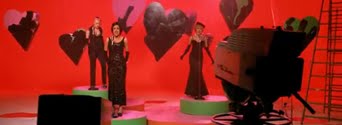
For example in Stooshe's video 'Black Heart' towards the end of the video, the characters paint the backdrop/set design of hanging hearts black from pink. This visual is re-enforcing the lyric "He got a black heart" and supporting.


3 -THERE IS A RELATIONSHIP BETWEEN MUSIC AND VISUALS


This is shown through the visuals of the music video and the pace and dynamics of the music video.

For example in Jamie T's music video 'Sticks 'n' Stones' it is an upbeat fast song, which is shown in the video, there are many shots of trains, people running, tracking shots etc, making it feel like a fast paced music video as well as song.


4 -THE DEMANDS OF THE RECORD LABEL WILL INCLUDE THE NEED FOR LOTS OF CLOSE UPS OF THE ARTIST AND THE ARTIST MAY DEVELOP MOTIFS ACROSS THEIR WORK


This could be shown as a visual style or something that the re-occurs in their music videos that is automatically recognisable.
For example in Mumford & Sons music videos, there are close ups of the lead singer singing and the musicians playing their instruments, in most of their videos they try and re-create the iconic image of the playing their powerful instruments, which is recognisable to their fans.


5 -THERE IS FREQUENT REFERENCE TO NOTION OF LOOKING AND PARTICULARLY VOYERISTIC TREATMENT OF THE FEMALE BODY


This is often shown through women in underwear, swimsuits or little clothing.


An exmaple of voyerstic treatment of the female body is shown in Nicki Minaj's music video 'Starships' where she is mainly featured in a barbie pink bikini and nothing else. There are repeated shots of Nicki Minaj wearing not a lot, but it is used to draw attention to the song/video to create attention and hype.


6 -THERE ARE OFTEN INTERTEXTUAL REFERENCES (TO FILMS TV AND OTHER POSSIBLE REFERENCES)


An intertextual reference can be made through costume, set design, lyrics, prop mise-en-scene and many other ways. It link highlights the fact that the artist wanted the audience to think of the reference and link it to their video. It gives a deeper meaning to the video/song.
For example in Madonna's music video to Material girl (1985), she werars similar costumes, has the same set and the same style of men surrounding her as Marylin Monroe does in 'Gentlemen Prefer Blondes' (1953) song 'Diamonds Are A Girl's Bestfriend'. This reference is to make the link that Marylin Monroe was a very sexy woman and portrays a suggestive image in the pink gown she wears. Madonna tries to replica this image by making the intertextual reference to this video.


Tuesday, 26 June 2012

'AFRIKA SHOX' ANALYSIS

'Afrika shox' by Leftfield is an integrated genre of music, in other words, you can't put one label of genre on it. You could define it as Dance/Electronic/Progressive house. The Dance music aspect of it could be re-enforced by its connection to the slave trade, also the main character in it, moves in a choreographed way within the video. This could be because the director wanted to the two aspects together, slavery and dance. Different styles of dance originated from slavery, like the limbo dance, which can be inter-textually referenced to the poem 'Limbo', written by Edward Braithwaite. "and the music is saving me...knees spread wide...and the dark deck is slavery"
The first quote "and the music is saving me" is a reference to this music video because you could link the fact that the slaves smuggled tiny drums or small instruments on board to play when not being 'used'.
The second quote "knees spread wide" means that the area the slaves had to live in was tiny, cramped and inhumane, but this is where the limbo dance was invented. Perhaps this is where the director wanted the character's background to be like to create such a contrast between the life in NYC and the character's reactions to it all.
The third quote "and the dark deck is slavery" is self explanatory. The 'dark deck' could be NYC and it is driving the man to madness.

As well as the inter-textual reference, the video is highly representative of many things, including Racism, political issues, slavery and a dystopia.

The first shot is of a high-rise building, the shot is panning-down from the top of the building down to ground level, this could represent the character's status in the hierarchy, it is implying that he is at the bottom of the heap, and the least priority. In society today, it is usually those who are most insignificant that are
invisible to the public eye. However in reference to slavery which is what the man is representing, the slaves would be the 'lesser person' or maybe not be seen as a person at all. So again this links to his status in society as a citizen and representing a slave.
The mse-en-scene is an urban area, very different to what he may be used to - rural landscape maybe not even in the US. Lighting is Noir and saturation is low, possibly showing the bleak reality and how everyone is the same, there is no colour or difference anymore.

The second shot is of a police car roaming the streets for crime. This can represent the pressure on the people to do 'the right thing' and not to 'step out of line' to fight for what they believe in. The police car also represents the constraints and rules that lay on society, looking at this in greater detail, in times of slavery, it could be the buyers of the slaves that the police car represents, one who 'owns' the slaves is the one to be afraid of. In the video, the car move out of the police cars way, showing that they are important and you need to respect them.

The third important shot is of the man rising out from the shadows with his own strength and standing up into the light. Almost like in the 'Limbo' poem when Braithwaite describes the slaves getting off the ship and about to enter a whole new world. "hot slow step on the burning ground". He is becoming a part of a world which he has never been in before. This can be linked to immigrants from other cultures in society who move to find a better life but are stunned by the harsh reality which is modern society. The mise-en-scene is in a small alleyway, te brick wall maybe representing his support, but will have to cast off from his life line. The lighting is chiaroscuro and is coming from a natural spotlight of daylight, possibly representing his way out of his rut.

The next representative shot is one of the character crossing the road, the way he carries himself/walks is unsteady and wonky, like he is unbalanced and hasn't been on his feet/stood up properly for a long time. This could link in with the slaves boarding off the ship having not stood up properly for many months, their muscles would have weakened, they would be very thin and unbalanced. Society back then took no pity on those people, felt no sympathy and left them to deal with it them selves when they could have used some assistance, again highlighting the harsh reality of society. The streets (mise-en-scene) are urban, cars and people surround the character, representing that society is closing in on him and he is the odd one out. The lighting is ambient and the saturation of the shots is low.

Shot 5 I have picked up on is the tracking shot of the man crossing the road, his legs are like twigs, so fragile and look like they are about to snap, much like the slaves legs would have been after months of neglect and no exercise.


The next shot/s included are two that work only together, without one another they would not have such a strong meaning. There is a shot of the man falling over on the pavement and looking around maybe for some help. The shot then cuts to a shot of a flashing sign saying 'walk', like it is dictating to the man what to do. An object is giving a human being orders. Something is not right. This shot raises anger and is frustrating. A human with natural faults is sad, but this is even more saddening because in time of slavery neglect and lack of space would have led to this and this is the fault of the dictating humans. However the character appears to not be affected by this stumble and neither does anybody else around him, keeping themselves to themselves and not caring about others around them.

This shot of the man exhibits him showing interest in the character, however he makes no attempt to assist the man whatsoever. The expression on his face appears to be 'disgusted' by the man, and possibly that he is a disgrace to that society of Aryan people. One thing changes that man and it is the colour of his skin. And that shouldn't change anything at all.


While the man watches the white dancers, he looks distressed and confused, maybe to the fact that some dancing originated from the slave trade. He may feel like the white people have ripped dancing away from his culture and their traditions. Like the white people are trying to control everything he does. The mise-en-scene of this shot is basic, however expensive cars expressing the wealth of the people can be intimidating to those who do not have much. There is little lighting, what is there is probably non-ambient, excluding the lights running along the ceiling, much like prison bars to subtly highlight his confinement.


The last and probably most memorable shot is of another coloured man in modernized yet traditional tribe 'uniform' or accessories. He is the only person who realises the man needs help. After the character has fallen on the floor, it cuts to a low angle point of view shot of the man in his recognisable (to the character) attire. To this man he must seem like an angel. This shot exposes that there are few people in society that will be willing to help, it may also appear a little intimidating as the man is leaning over him with a kind of stick. This could mean that he is in charge of the white people and he has flipped apartheid on its head. There is a spotlight just out of shot, but near enough for you to be able to see it.

Referring to Andrew Goodwin's music video analysis, "There is often inter-textual reference"and there is of course, inter-textual references, not necessarily to a video but to 'Limbo' as stated earlier, there is a very strong connection between that poem and this video.
Another link could be "There is a relationship between lyrics and visuals" There are aspects of this as well. "Africa... cities of angels... some say the year 2000 has been here since yesterday" 'Africa' is shown through the character and the colour of his skin, it is almost a cultural signifier. 'cities of angels' is said just before the 'angelic man' helps the man up which links as Goodwin's theory states. 'some say the year 2000 has been here since yesterday' This could be referring to the fact that slave trade was a very long time ago but it is still here today.


PUNK RESEARCH

One of my favourite music videos is from a 'punk-esq' band, they have influence over the way I think politically and about money and of course music. After watching 'God Save The Queen' by the Sex Pistols I decided to to a bit of further research into the genre and way of life. this section of research will be based around the Sex Pistols after having watched their music videos and owning a number of their Cd's.

Other bands such as The Ramones or the New York Dolls might have invented the punk sound. Richard Hell might have invented the punk image. But the Sex Pistols came to define punk. They are the band that turned punk from a cool little Rock'n'Roll sub-genre into a worldwide musical, artistic explosion. The Sex Pistols ripped it off New York and made it their own.
The Pistols added a British twist of humour and brought elements of pantomime to this new sound. They were everything that was the worst and the best about they British, all wrapped up into one
explosion of spitting hate and cynical fury.

The Sex Pistols started off in London in a lace called The Strand. However
at this point the band were not called the 'Sex Pistols'. The band regularly hung out at Vivienne Westwood and Malcolm McLaren's shop - 'Too Young To Live, Too Young To Die.' Westwood and McLaren agreed on styling a clothing range on them, She changed the shop name to 'Sex' which gave the inspiration for the Sex Pistols to change their name also. She changed her focus to anti-fashion wear and specialized in stage wear, glamour wear and rubber wear. McLaren soon became the bands manager, he paid for their first rehearsal space etc. Sid Vicious was recruited when he walked into 'Sex' wearing an 'I Hate Pink Floyd' top and bright green hair.

'Never Mind The Bollocks Here's The Sex Pistols' (1977) was the name of their album originally intended to be called 'God Save The Queen'. The name of this album cause difficulty for the band as stationary shops refused to store stock and sell the album. Although someone was able to demonstrate that the word 'Bollocks' meant 'Old Preist'.

'God Save The Queen' single was released on the 17th May 1977 deliberately released in the' the year of the Queen's Silver Jubilee. The celebrations proved a ripe target for punk's own
aristocracy to attack. After leaving EMI labels the Sex Pistols held a press conference outside Buckingham Palace and played their new release - 'God Save The Queen' .

They were banned from the square, and hours afterwards hired a boat to take them down the River Thames deliberately passing Westminster and the houses of Parliament. They did this whilst playing the track on full volume passing these critical places, but soon got stopped by the River Police. This whole experiment was perceived as an attack on The Queen.
However Johnny Rotten said it was not an attack on a specific member but the whole Royal Society and Monarchy in general. He also remarked that they "had declared war on the whole country without intending to." 'God Save The Queen' was originally named something else but changed it to coincide with the Silver Jubilee.

It is fair to say the the Sex Pistols have had their fair share of making history and intend to make some more.

FAVOURITE MUSIC VIDEO-3

3. The Cads are are local band from the Norwich area. I first came across them when I was at a gig for another band and they were the support act, amongst other bands. I saw they were playing and supporting more bands in the local area, so I went to see them again. This is there most recent song.

The video is made by Stefan Vincent who is the lead singer of the band, he makes collages and slightly abstract computer images using layering. He has also makes other stop motion videos. This video is made by him and his skill at stop motion, it works so effectively and fits with his style, random but surprisingly pleasing. I love the ideas gone into this video and the thought process that accompanies it. I think this is original, innovative and and creative.


Monday, 25 June 2012

FAVOURITE MUSIC VIDEO-2

2. Bloc Party have always been one of my favourite band's but it was not until recently did I ever see this video to 'I Still Remember'.

The aspects of this video that I like are the fact that a lot of the shots are on a loop but different things happen in each of them, almost like a repeat but just a small action or emotion has changed. I admire the simplicity of the video which is probably what attracted me to it in the first place.


The song fits well with the video as it is also quite repetitive. (in a good way) It is about a relationship, he is looking back trying to see where he went wrong, or maybe a friendship.


FAVOURITE MUSIC VIDEO-1

1. My first music video is from one of my favourite bands; The King Blues. They are a highly political band and fight for what they believe is right. I admire them greatly, they also express their views through their songs. The music they write is somewhere between the PUNK/ROCK/ELECTRO/ACOUSTIC genres.


'Set The World On Fire' is one of my favourite music videos because of the reasoning behind some of the actions in the music, the contrast between the two lives of the characters and also the representation within in it. When Gordon Brown was Prime-minister they rented a billboard and wrote him a very public message on it. This music video gives a glimpse into their beliefs.


This music video tries to highlight the ways in which different people/classes live. I think when the lead-singer 'Itch' hammers through the wall, it is meant to ironically symbolize equality and that there is no higher ground between the neighbors, but we all know that is never going to happen in the real world.


A few days before the shoot for this video, The King Blues wrote a letter to the Daily Mail containing their lyrics to 'Set The World On Fire'. This was the report of what the Daily Mail replied with. "The band sent a copy of "Set the World On Fire" to the Daily Mail, who responded by pulling every article, webpage and reference to The King Blues from everything they own."

In reply to this, The King Blues un-ostentatiously burnt a copy of the Daily Mail's newspaper in this music video.